Summary: If your dryer is not heating even though the drum is turning, the problem may be as simple as an incorrect setting or power issue—or it may involve airflow, a failed heating component, or another internal problem. Before running another load and hoping for a different result, check a few safe things. If those don’t solve the problem, professional dryer repair can usually identify why the appliance tumbles normally but won’t produce heat.
Your Dryer Is Running. So Why Are the Clothes Still Wet?
You toss in a load of wet laundry, start the dryer, and hear the familiar sound of clothes tumbling. Everything seems normal—until the cycle ends and you open the door to find a pile of damp clothes.
When your dryer is not heating, running it through cycle after cycle usually won’t solve anything. It wastes time, can increase energy use, and may allow an airflow or mechanical problem to continue.
For homeowners around Colorado Springs and the surrounding Pikes Peak region, a dryer problem can turn an ordinary laundry day into a growing pile of wet clothes surprisingly quickly.
The good news is that a dryer running without heat doesn’t automatically mean you need a new appliance. Start with a few simple checks before assuming the worst.

Why Is My Dryer Not Heating Even Though It Runs?
Dryers depend on more than the motor that turns the drum. The appliance also needs the correct power or fuel supply, adequate airflow, temperature controls, and functioning heating components.
If the drum turns but the dryer is not heating, possible causes include:
- You accidentally selected a no-heat or air-dry setting.
- An electrical supply problem is preventing an electric dryer from heating.
- Restricted airflow is affecting dryer performance.
- A heating element or temperature-related component has failed.
- A gas dryer has a problem with its heating or ignition system.
- An internal safety component has interrupted heat production.
Some of these are easy for a homeowner to check. Others require an appliance repair professional to diagnose.
Start With the Dryer Settings
This sounds obvious, but it is worth checking before scheduling a repair.
Look at the selected cycle and temperature settings. Some dryers have Air Dry, Air Fluff, Eco, or No Heat options that may tumble clothes without producing the heat you expect. Certain automatic cycles can also behave differently from timed drying modes.
If someone else recently used the dryer, the controls may have been left on a different setting.
Try a normal heated cycle using the settings recommended in your owner’s manual. If the dryer is not heating after you’ve confirmed the controls are correct, move on to the next checks.
An Electric Dryer May Run Without Getting Enough Power to Heat
One of the more confusing possibilities when an electric dryer is not heating is that the drum can sometimes turn even when the appliance isn’t receiving the electrical supply needed for normal heating.
Check your home’s electrical panel for a tripped breaker associated with the dryer. Follow the manufacturer’s instructions and your home’s electrical-safety practices when resetting a breaker.
If the breaker trips again, don’t keep resetting it. Repeated tripping may indicate an electrical or appliance problem that needs professional attention.
Never open electrical panels inside the dryer or attempt to test live components yourself.
Restricted Airflow Can Cause Dryer Problems
Your dryer needs to move warm, moist air out of the drum effectively. When airflow becomes restricted, drying performance can suffer, and the appliance may operate abnormally.
Start with the easiest place: the lint screen.
Reliable Appliance’s guide to dryer vent maintenance explains why restricted dryer airflow deserves attention. Clean the lint filter and check whether it is excessively clogged. You should generally clean the lint screen after every load.
Also pay attention to warning signs such as:
- Clothes taking much longer than normal to dry
- The dryer or laundry area becoming unusually hot.
- Excess lint collecting around the appliance
- Weak airflow at the exterior vent
- A musty or unusually humid laundry room
Don’t ignore a blocked dryer vent. Beyond hurting dryer performance, lint buildup can create a fire hazard. Reliable Appliance also has additional guidance on preventing dryer fires.
The Heating Element or Another Internal Component May Have Failed
If the settings, electrical supply, lint screen, and obvious airflow issues all check out, but the dryer is not heating, an internal component may be responsible.
In an electric dryer, that can include the heating element or components that control and monitor temperature. Dryers also contain safety devices designed to respond when operating conditions become unsafe.
The important point for a homeowner isn’t figuring out exactly which internal component failed. It’s recognizing when you’ve reached the limit of useful DIY troubleshooting.
Replacing parts based on an internet guess can become expensive quickly. Several failures can produce almost identical symptoms, so proper diagnosis matters.
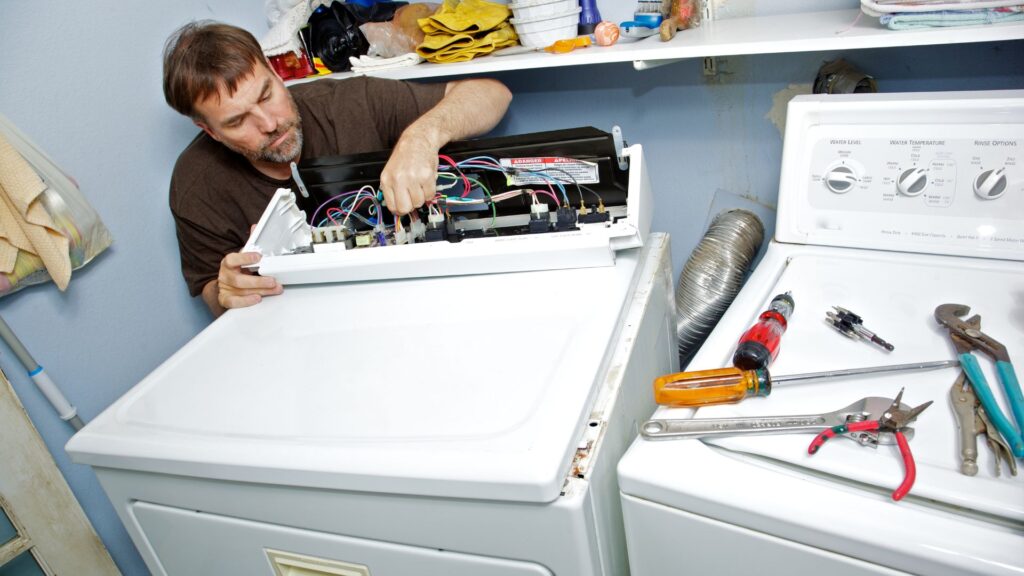
dryer is not heating
Need Dryer Repair in Colorado Springs?
If you’ve checked the basic settings, power supply, and accessible airflow areas and your dryer is not heating, Reliable Appliance can diagnose the problem and determine what repair makes sense.
Learn more about dryer repair in Colorado Springs or contact Reliable Appliance to schedule service.
What Your Appliance Repair Person Wants You to Know When A Dryer Is Not Heating
Here’s something that can save you time: “not heating” describes the symptom, not the diagnosis.
Homeowners understandably search for a single part to replace. But several problems can cause a dryer to tumble without heating.
That’s why a professional diagnosis can be more useful than ordering the first replacement part a video or forum suggests.
Before the appointment, you can help your repair technician by noting:
- Whether the dryer is not heating at all or only at weak/intermittent heat
- Whether the drum still turns normally
- Whether drying times became longer before the heat stopped
- Whether a breaker has recently tripped
- Whether the dryer seems unusually hot
- Whether you’ve noticed unusual smells or sounds
- The approximate age of the dryer
Those details can provide useful clues without requiring you to take the appliance apart.
Another thing worth knowing: if your dryer is not heating, repeatedly running it isn’t a good diagnostic strategy. If one or two basic checks don’t restore normal operation, stop wasting cycles and address the underlying problem.
Should You Repair or Replace a Dryer That Isn’t Heating?
A dryer with no heat does not automatically need to be replaced.
The better decision depends on factors such as:
- The dryer’s age
- The specific failed component
- The cost of the repair
- The overall condition of the appliance
- Whether it has had repeated problems
- The availability of replacement parts
A relatively straightforward repair on an otherwise dependable dryer may make much more sense than buying a new machine. An older dryer with several developing problems may be a different story.
Diagnosing the problem first lets you decide whether to repair or replace based on the actual failure, rather than assuming a dryer without heat is finished.
When Should You Call for Dryer Repair?
Schedule professional service when your dryer is not heating after you’ve checked the basic settings, power supply, lint screen, and other safe, accessible items.
You should also stop using the dryer and seek professional help if:
- A breaker repeatedly trips
- The dryer becomes excessively hot.
- You notice a burning smell.
- You smell gas around a gas dryer.
- The dryer begins making unusual noises.
- Drying performance has been steadily getting worse.
- You suspect an internal electrical, heating, or gas-system failure.
The goal isn’t to replace parts until you know what’s wrong. A dryer repair technician can diagnose why the dryer isn’t producing heat and help you decide whether repairs are worth it.
Get Your Laundry Routine Moving Again
Wet clothes don’t need to become a permanent fixture in your laundry room.
If your dryer is not heating and the simple checks above haven’t solved the problem, Reliable Appliance provides dryer repair for homeowners, landlords, property managers, and other customers throughout Colorado Springs and the surrounding Pikes Peak region.
Our team can diagnose why the dryer isn’t heating, explain your repair options, and help you decide whether repairing or replacing the appliance makes the most sense.
Schedule dryer repair with Reliable Appliance and get back to finishing laundry in one cycle instead of three.
FAQs
Why is my dryer not heating but still spinning?
If your dryer is not heating but the drum continues to spin, the motor and heating system may simply be experiencing different problems. First, check the cycle settings, electrical supply, lint screen, and accessible airflow areas. If those checks don’t reveal the cause, an internal heating or temperature-control component may require professional diagnosis.
Can a clogged dryer vent cause a dryer not to heat properly?
Restricted airflow can cause poor drying performance and may contribute to overheating or abnormal dryer operation. If clothes take longer to dry, the laundry room feels unusually hot, or airflow seems weak, inspect the vent system. Because lint buildup can also create a fire hazard, don’t ignore vent problems.
Is it worth repairing a dryer that is not heating?
Often, yes. A dryer that isn’t heating may have a repairable component failure rather than a problem that requires appliance replacement. The dryer’s age, condition, repair cost, and history of previous problems should all factor into the decision. A professional diagnosis gives you better information for comparing repair with replacement.
Who repairs dryers that aren't heating in Colorado Springs?
Reliable Appliance provides dryer repair in Colorado Springs and surrounding Pikes Peak communities. If basic troubleshooting hasn’t restored the heat, a technician can diagnose the cause and explain whether repairing the dryer makes financial sense.