Summary: A refrigerator running but not cooling can be caused by blocked airflow, incorrect temperature settings, door seal problems, excessive frost, fan failures, or more serious refrigeration system issues. Use these troubleshooting tips to diagnose the issue with your refrigerator, and know when to call in the professional appliance repair team at Reliable Appliance.
Humming Refrigerator, Warm Food? There’s an Answer.
If you can hear your refrigerator humming or cycling like normal but the food inside keeps getting warmer, you have a frustrating—and potentially time-sensitive—problem. A refrigerator running but not cooling can be caused by something relatively simple, such as blocked airflow or an incorrect temperature setting, or by a problem that requires professional repair.
The important thing to understand is that a running refrigerator isn’t necessarily a cooling refrigerator. Several components have to work together to remove heat and circulate cold air through the appliance.
Why a Refrigerator Can Run Without Getting Cold
Hearing your refrigerator running but not cooling means the appliance is receiving power and at least part of its operating system is active. It doesn’t tell you whether the refrigerator is actually producing and circulating cold air correctly.
Proper cooling depends on several things working together, including airflow, fans, temperature controls, the condenser and evaporator systems, and the compressor.
A problem in one area can leave you with a refrigerator that sounds busy but isn’t doing its most important job: keeping your food cold.
See Also: 3 Things Your Appliance Repairman Wishes You Knew
Common Reasons Your Refrigerator Is Running but Not Cooling
1. The Temperature Setting Has Changed
Start with the simplest possibility.
Check the refrigerator’s temperature controls to make sure the setting wasn’t accidentally changed. This can happen when you move food around, clean the refrigerator, or someone adjusts the controls without realizing it.
If you recently changed the temperature setting, give the refrigerator time to respond instead of adjusting it repeatedly.
2. Cold Air Isn’t Circulating Properly
A refrigerator running but not cooling needs adequate airflow inside the compartments.
Containers, grocery bags, and tightly packed shelves can sometimes block interior vents and prevent cold air from reaching parts of the refrigerator. The appliance may continue running as it tries to reach the selected temperature.
Check how you arrange food, and make sure packages aren’t pressed directly against obvious air vents. Avoid packing the refrigerator so tightly that air can’t circulate.
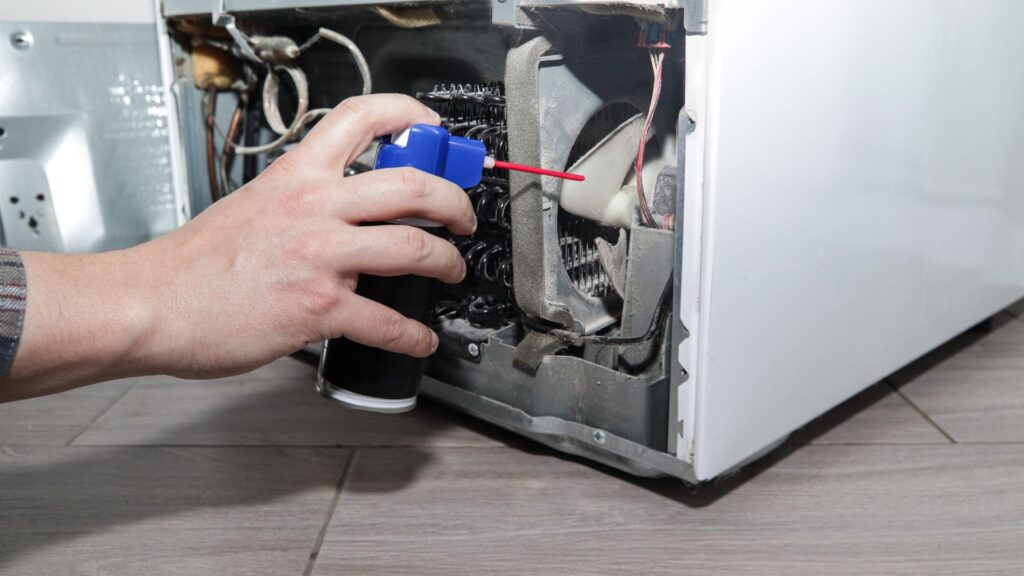
3. The Condenser Area Needs Attention
Your refrigerator has to release heat as part of the cooling process. Dust, pet hair, and debris around accessible condenser areas can interfere with efficient heat transfer on models that require homeowner cleaning. Consult your refrigerator’s manufacturer instructions to determine whether and how to clean its accessible condenser area.
If cleaning requires removing internal components or working around electrical parts, leave the job to a qualified refrigerator repair technician.
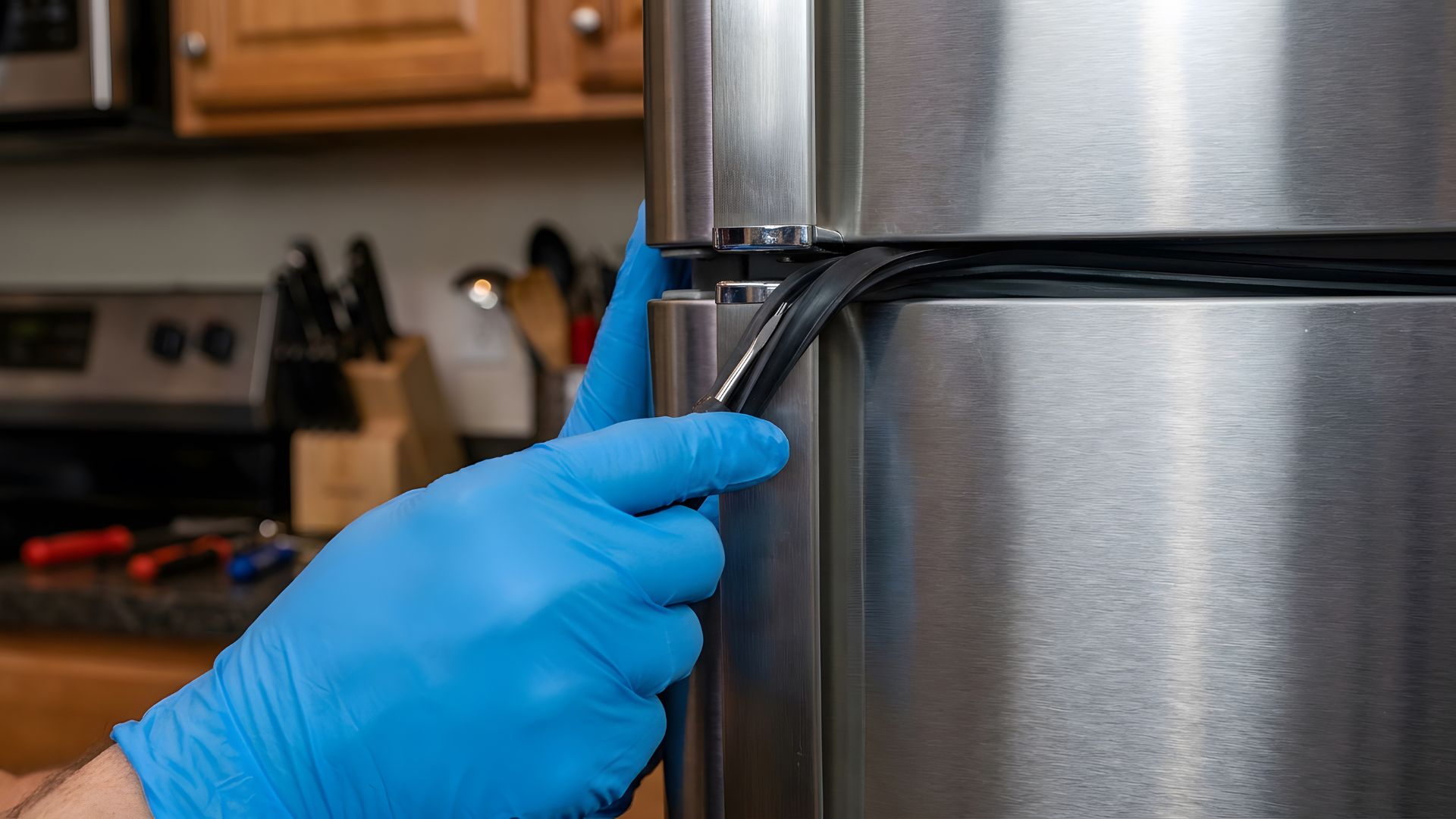
4. The Refrigerator Door Isn’t Sealing Correctly
A refrigerator can run for long periods if warm room air continually enters through a poorly sealed door.
Check for obvious reasons the door may not be closing completely:
- A food container or drawer is preventing it from shutting.
- Items stored in the door are interfering with closure.
- The door gasket is visibly dirty or damaged.
- The refrigerator is overloaded, and packages are pushing against the door.
Make sure the door closes completely and inspect the gasket for visible gaps or damage.
5. A Fan Isn’t Working Properly
Depending on the refrigerator design, fans help move air through the appliance and help the refrigeration system release heat. When you have a refrigerator running but not cooling, a faulty fan may be one possible cause.
Diagnosing or replacing an internal fan generally requires more than a basic homeowner check. If airflow seems unusually weak or your refrigerator is running but not getting cold despite proper settings and unobstructed vents, contact the repair professionals at Reliable Appliance.
6. Frost Is Interfering With Airflow
Excessive frost can interfere with the refrigerator’s ability to circulate cold air.
If you see an unusual amount of frost or ice buildup inside the freezer or around accessible vents, the underlying problem could involve the refrigerator’s defrost system or another component.
Repeated or heavy frost buildup deserves professional attention rather than repeated attempts to remove the symptom without determining why it keeps happening.
7. There’s a Compressor or Refrigeration-System Problem
A more serious possibility is a problem involving the compressor or sealed refrigeration system.
These problems aren’t suitable for DIY. Refrigeration-system work can involve electrical components and refrigerants, so a qualified appliance repair professional should handle it.
If the refrigerator running but not cooling continues, and both the fresh-food and freezer compartments are getting warmer, professional diagnosis from a reputable appliance repair technician can help determine whether you’re dealing with a repairable component failure or a larger refrigeration-system issue.
Safe Things to Check When Your Refrigerator Isn’t Cooling
Before scheduling service, you can make several low-risk checks without taking the refrigerator apart.
- Check the temperature setting. Make sure the controls haven’t accidentally been changed.
- Check the doors. Confirm that both refrigerator and freezer doors close completely.
- Inspect the door gasket. Look for obvious dirt, damage, or gaps that could prevent a good seal.
- Check interior airflow. Move food away from visible vents and avoid overcrowding shelves.
- Look for unusual frost. Heavy frost can be a useful clue when describing the problem to a technician.
- Follow manufacturer cleaning instructions—clean only components designed to be safely accessed and maintained by the homeowner.
If these checks don’t restore normal cooling, don’t disassemble panels or experiment with electrical or refrigeration components. At that point, identifying the failure usually requires professional diagnosis.
Read More: Why Is My Freezer Not Freezing? – An Expert Troubleshooting Guide
When Does a Refrigerator That Won’t Cool Need Professional Repair?
Cooling problems matter because food temperature can keep rising even when the refrigerator appears to be running.
Consider scheduling refrigerator repair when:
- The refrigerator continues getting warmer despite the correct settings.
- Both the refrigerator and freezer compartments are losing cooling.
- You notice repeated or excessive frost buildup.
- Airflow inside the appliance seems unusually weak.
- The refrigerator is running almost continuously without reaching the proper temperature.
- You hear new clicking, buzzing, or other unusual sounds along with the cooling problem.
- Basic checks haven’t identified an obvious cause.
For Colorado Springs homeowners, landlords, and property managers, a refrigerator that isn’t cooling is usually a problem worth addressing promptly, not waiting several days to see what happens.
Should You Repair or Replace a Refrigerator That Isn’t Cooling?
A refrigerator that stops cooling does not automatically need to be replaced.
The better decision depends on factors such as:
- The refrigerator’s age
- Its overall condition
- How frequently it has needed repairs
- The component that failed
- The estimated repair cost
- The cost and practicality of replacement
A relatively straightforward component failure can make repair the sensible option, particularly when the refrigerator is otherwise in good condition.
On the other hand, an older refrigerator with a history of breakdowns or a major refrigeration-system failure may deserve a closer repair-versus-replacement comparison.
The key is to find out what’s actually wrong before assuming you need to buy another appliance.
You Might Like: Tips for Troubleshooting Your Broken Washing Machine
Refrigerator Running but Still Not Cooling? – Refrigerator Repair in Colorado Springs
When your refrigerator is running, but your groceries are getting warmer, you need an answer—not a guessing game. If you’ve checked the temperature settings, door seal, and airflow and your refrigerator still isn’t keeping food cold, it’s time to find out what’s actually wrong. Schedule your refrigerator repair today and get a professional diagnosis before a cooling problem turns into a refrigerator full of spoiled food. Reliable Appliance Repair serves homeowners, landlords, and property managers throughout Colorado Springs and the surrounding Pikes Peak area.
FAQS
Why is my refrigerator running constantly but not getting cold?
If your refrigerator is running but not cooling, it may be working continuously because it can’t reach the target temperature. Blocked airflow, a door-seal problem, excessive frost, a fan failure, or a refrigeration system issue can all contribute. If simple checks don’t reveal the cause, professional diagnosis is appropriate.
Why is my freezer cold but my refrigerator is warm?
A freezer that stays cold while the refrigerator is warm often points to an airflow problem between the compartments. Blocked vents, excessive frost, or a fan issue may prevent enough cold air from reaching the fresh-food section, leaving the refrigerator running but not cooling enough.
How long should I wait to see if my refrigerator starts cooling again?
If you recently changed a temperature setting or left the refrigerator door open, give it time to stabilize. However, if you notice your refrigerator running but not cooling and food keeps getting warmer, don’t assume the sound of the appliance running means temperatures are safe. Address the cooling problem promptly.
Who can repair a refrigerator that isn't cooling in Colorado Springs?
If your refrigerator isn’t cooling properly, Reliable Appliance Repair provides refrigerator repair in Colorado Springs and the surrounding Pikes Peak area. If basic checks haven’t solved the problem, professional diagnosis can identify the cause and help you determine the appropriate repair.