
Summary: A washing machine shaking during spin cycle can be caused by something as simple as an unbalanced load, but repeated banging, rocking, or movement may signal a leveling, installation, or internal mechanical problem. Knowing which signs you can safely check yourself—and which ones call for professional washing machine repair—can help prevent additional wear and get laundry day back to normal.
When Your Washer Turns the Spin Cycle Into a Shake Cycle
You start a load of laundry, everything seems normal, and then the spin cycle begins. Suddenly, the washer bangs, vibrates, or moves far more than it should. A washing machine shaking during the spin cycle can be startling—and if the machine is actually moving across the laundry room, it’s hard to ignore.
For homeowners in Colorado Springs and the surrounding area, the good news is that a washing machine shaking during spin cycle doesn’t automatically mean your washer is finished. Sometimes the cause is as simple as an unbalanced load. But repeated or violent shaking can also point to a leveling, installation, or internal mechanical problem that should be diagnosed before it gets worse.
See Also: What Should a Landlord Do When a Tenant’s Refrigerator Stops Working?
Why Is My Washing Machine Shaking During Spin Cycle?
The spin cycle is when your washer operates at high speed to remove water from your clothes. If the weight inside the drum isn’t evenly distributed—or the machine isn’t properly supported—the spinning motion can create noticeable vibration.
An occasional shaky load, especially when washing bulky items, isn’t necessarily cause for alarm. Persistent shaking is different.
If your washer repeatedly bangs, rocks, or moves during normal loads, possible causes include:
- An unbalanced load
- An overloaded or underloaded washer
- A washer that isn’t sitting level
- Unstable or improperly adjusted feet
- An installation problem
- Worn suspension or shock-absorbing components
- A problem involving the tub, drum, or another internal component
The important question isn’t simply whether the washer shakes. It’s how often, how violently, and under what conditions is the washing machine shaking during spin cycle.
Common Reasons For a Washing Machine Shaking During Spin Cycle
The Laundry Load Is Unbalanced
This is one of the simplest explanations.
Heavy items can collect on one side of the drum, creating an uneven weight distribution. Blankets, towels, bath mats, and similar items are common offenders because they can become especially heavy after absorbing water.
If the washer starts banging during a particular load, stop the cycle per the manufacturer’s instructions and redistribute the items evenly. If that solves the problem and the washer behaves normally afterward, you may have found the cause.
The Washer Isn’t Level
A washing machine needs a solid, level base, particularly during high-speed spinning.
If one corner isn’t properly supported, the machine can rock back and forth. Use a basic level on top of the machine to check for levelness, and gently see whether the washer rocks when it isn’t running.
If you recently moved, installed, or repositioned the washer, pay special attention to leveling.
The Washer’s Feet Aren’t Stable
Even if the floor is reasonably level, the washer’s adjustable feet need to make solid contact.
If a foot is loose or improperly adjusted, the washer may seem fine during slower portions of the wash cycle but become much more unstable once the drum reaches spin speed.
Follow your washer manufacturer’s instructions for leveling the appliance rather than tipping, disassembling, or making complicated adjustments yourself.
A Recently Installed Washer Has an Installation Problem
If a new or recently moved washing machine shakes excessively on its first load, the issue may be installation.
For example, some front-loading washers use shipping bolts or other transportation hardware to stabilize the drum during transport. You must remove these according to the manufacturer’s installation instructions.
A washer that has always shaken since installation suggests a different issue than one that worked quietly for years and suddenly started banging.
Read Next: Why Is My Refrigerator Running but Not Cooling?
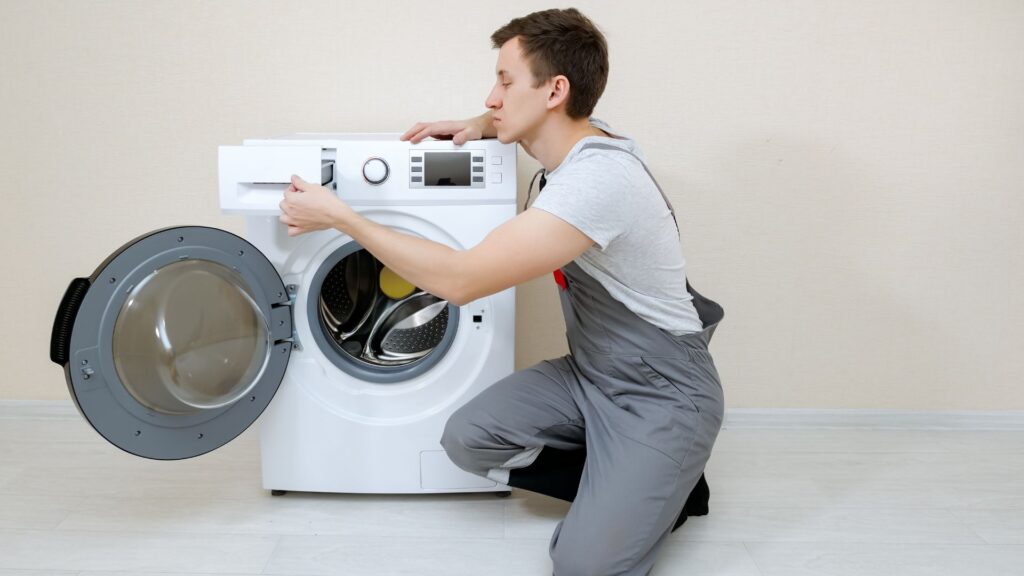
What to Check Before Calling for Washer Repair
Before scheduling service for a washing machine shaking during spin cycle, there are a few simple things you can check without disassembling the appliance:
- Redistribute the laundry. Make sure heavy items aren’t concentrated on one side.
- Check the load size. Avoid overfilling the washer, and follow the manufacturer’s loading recommendations.
- Make sure the washer is level. Use a level on top of the appliance.
- Check for rocking. With the washer off, gently check whether all four corners feel stable.
- Consider recent changes. Did the problem start after you moved or installed the washer?
- Listen to the sound. Grinding, scraping, or hard banging can point to something beyond a simple load imbalance.
If these checks don’t solve the problem, repeatedly running the washer isn’t a good troubleshooting strategy.
Still dealing with a washing machine shaking during spin cycle? Reliable Appliance provides washing machine repair in Colorado Springs and can diagnose the cause of excessive movement before it leads to additional problems.
What Your Appliance Repair Person Wants You to Know About a Shaking Washer
One of the biggest misconceptions about a shaking washer is that every vibration problem is basically the same. It isn’t.
A washer that occasionally becomes unbalanced with a bulky comforter is very different from a machine that suddenly begins shaking during every ordinary load.
A few things are worth knowing:
- Anti-vibration pads aren’t a cure for a mechanical problem. They may help with normal vibration in some situations, but they won’t repair worn internal components.
- Sudden changes matter. If a machine worked normally for years and abruptly starts shaking, something has changed.
- More shaking can mean more stress on the machine. Letting a washer bang and move repeatedly can put extra stress on hoses and other components.
- The noise itself provides clues. Banging, scraping, squealing, and grinding don’t necessarily point to the same problem.
- A quick video can help. If the shaking is intermittent, recording what the washer does during the spin cycle can give your repair technician useful context.
The goal isn’t to diagnose every component yourself. It’s to recognize when the behavior goes beyond a simple laundry-loading issue.
For more general washer troubleshooting, you might like: Tips for Troubleshooting Your Broken Washing Machine.
When Washing Machine Shaking During Spin Cycle Means It’s Time for Professional Repair
Consider scheduling professional service if:
- The washer shakes violently with normal, balanced loads.
- The machine moves across the floor.
- You hear repeated banging, grinding, or scraping.
- The drum appears loose or sits abnormally.
- The washer has begun leaking along with the vibration.
- The problem continues after confirming the machine is level.
- The shaking started suddenly and is getting worse.
These symptoms can indicate a problem beyond an unbalanced load.
Should You Repair or Replace a Shaking Washing Machine?
Don’t assume a shaking washer needs replacing.
The better decision depends on the cause of the shaking, the washer’s age, its overall condition, and the cost of the needed repair. A straightforward repair makes much more sense than replacing an otherwise dependable machine.
For an older washer with several existing problems or a costly major failure, replacement may be worth considering.
Reliable Appliance has a separate guide on Is It Worth Repairing an Old Washing Machine? that can help you think through that decision.
Stop the Washing Machine Shaking During Spin Cycle Before It Becomes a Bigger Laundry-Day Problem
A washing machine shaking during spin cycle may need nothing more than a better-balanced load. But when the washer repeatedly bangs, rocks, or travels across the floor, it’s telling you something isn’t right.
If you’ve checked the load and confirmed that the washer is stable but the shaking continues, Reliable Appliance can diagnose the problem and recommend the appropriate next step. We provide washing machine repair for homeowners in Colorado Springs and the surrounding area.
Contact Reliable Appliance to schedule service and get your washer working again without having to walk out of the laundry room.
Frequently Asked Questions
Can an unbalanced load cause a washing machine to shake during the spin cycle?
Yes. An unbalanced load is one of the most common reasons for a washing machine shaking during spin cycle. Heavy items such as towels, blankets, or bath mats can bunch up on one side of the drum and cause excessive movement. If redistributing the load stops the shaking, the problem may have been temporary. If it happens regularly with normal loads, another issue may be responsible.
Why does my washing machine only shake during the spin cycle?
The drum spins much faster during the spin cycle to remove water from your clothes, which can make an imbalance or stability problem much more noticeable. A washing machine shaking during spin cycle may be caused by an uneven load, an unlevel machine, unstable feet, or worn components that are no longer controlling tub movement properly.
Why did my washer suddenly start shaking when it never did before?
If your washer previously ran smoothly, start by ruling out an unusually heavy or unbalanced load and checking that the machine is still level and stable. When a washing machine shaking during spin cycle becomes a recurring problem with normal loads, it may indicate that a suspension, shock-absorbing, or other internal component has worn or failed.
When should I call for washing machine repair in Colorado Springs?
Consider professional repair if your washer repeatedly shakes or bangs despite balanced loads, moves across the floor, makes grinding or scraping noises, leaks, or has a drum that appears loose or off-center. If basic checks don’t solve the problem, Reliable Appliance can diagnose the cause and recommend the appropriate next step for homeowners in Colorado Springs and the surrounding area.